The Heat is On -
As we move into the warmer months of the year, many of us look forward to long summer days filled with backyard barbecues, outdoor events, and time at the lake or pool. While summer offers plenty of opportunities to enjoy the season, it's important to recognize when the heat becomes dangerous.
North Carolina is already experiencing an increase in high heat days, with the summer of 2025 breaking multiple high-heat records and 100-degree days. That number is projected to rise significantly over the next 30 years. The NC Division of Public Health has already had to issue "Heat Health Alerts" for Chatham and neighboring counties as of the beginning of May, of this year (2026). As temperatures soar, the combination of extreme heat and high humidity can pose serious health risks. This is especially true for vulnerable populations such as older adults, young children, and those who work outdoors.
Last summer saw a significant rise in heat-related illness across the state (NC Statewide Annual Heat-related Illness Surveillance Report), with summer approaching and the heat season already begun, it is important to take steps now to ensure that number does not continue to rise.
Staying informed about heat forecasts and knowing how to prepare can help prevent serious heat-related illnesses and keep everyone safe during the hottest parts of the year.
Staying Safe in Extreme Heat
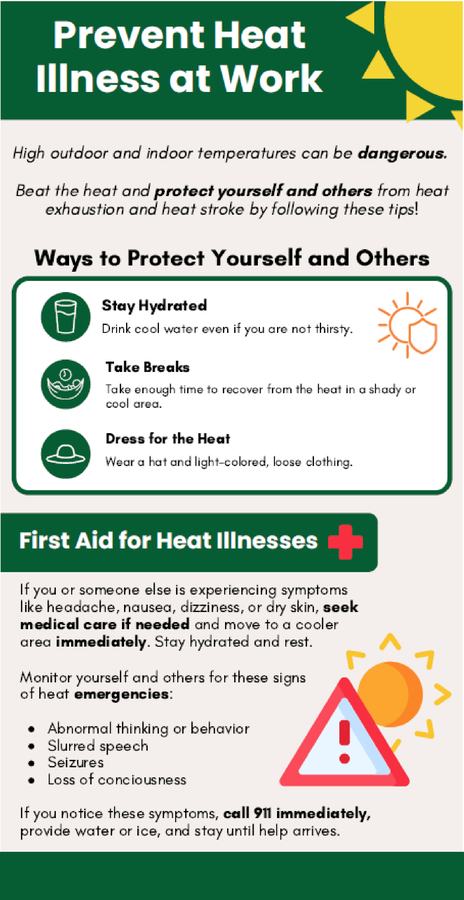
- Stay Hydrated Drink plenty of water throughout the day, even if you don’t feel thirsty. If being active or working up a sweat, have a sports drink on hand to replenish electrolytes. Avoid both alcohol and caffeine, which can dehydrate you.
- Limit Outdoor Activities Avoid strenuous activity during the hottest part of the day, typically between 11:00 a.m. to 4:00 p.m. If you must be outdoors, take frequent breaks in the shade or indoors.
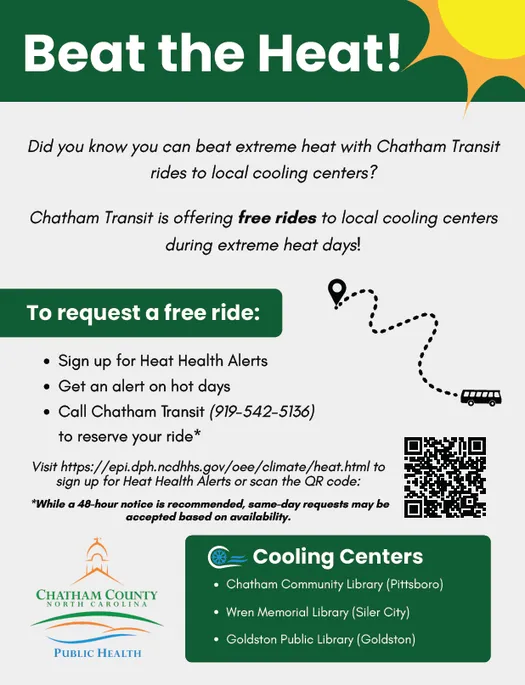
- Use Air Conditioning Spend time in air-conditioned spaces when possible, particularly throughout the hottest parts of the day. If you don’t have AC at home, visit public places like libraries or cooling centers during high heat days. In Chatham County, all of our public libraries operate as cooling centers. Alternatively, Chatham County Parks and Recreation offers a misting machine for a quick cool-down at Southwest District Park and Pittsboro provides a splash pad for children at Knight Farm Community Park. Know which option is closest to you and if necessary, make plans on how to get there on extreme heat days.
- Dress for the Weather Wear lightweight, loose-fitting, and light-colored clothing. A wide-brimmed hat and sunglasses can help protect you from the sun.
- Check on Vulnerable Neighbors Make sure family, friends, and neighbors, especially older adults or those with medical conditions, are staying cool and hydrated.
Watch for Warning Signs of Heat Illness
Knowing the symptoms of heat-related illnesses and the steps to take when they are identified can save lives: *Sunburn: High heat and humidity may slightly increase the chance of sunburn, but the primary factor is the intensity of UV radiation. While not directly caused by heat, sunburn impairs the body’s ability to shed excess heat and can lead to dehydration, and if unaddressed may be a precursor to further heat related illness.
- Heat Cramps:
- Symptoms: Heavy sweating, muscle cramps or spasms (often in the legs or abdomen)
- Response: Rest in a cool place out of the sun, drink water or a sports drink, and avoid strenuous activity for several hours
- Heat Exhaustion:
- Symptoms: Heavy sweating, fast & weak pulse, nausea, weakness, thirst, dizziness, headache, irritability
- Response: Move to a cooler place, loosen clothing, sip water, and apply cool compresses, take a cool bath/shower, seek medical attention if symptoms don’t improve within an hour of rest and fluids or if condition worsens
- Heat Stroke (Emergency Situation):
- Symptoms: Hot dry skin, confusion, loss of consciousness, rapid pulse, body temperature of 103°F or higher
- Response: Call 911 immediately. Move the person to a cooler location and try to lower body temperature with cool wet cloths, ice packs, or a bath, but do not give fluids if they are unconscious
- Symptoms: Redness, pain or tenderness, swelling, headache, nausea, vomiting, chills, fatigue, dizziness, blisters (in severe cases), and peeling (after a few days)
- Response: Move to a shaded or indoor area, apply cool damp cloths, take a cool (not cold) shower, gently apply aloe vera or moisturizing lotion, drink plenty of hydrating fluids